Allowed and Prohibited Items in Flight 2026: A Simple Guide for Safe Air Travel
Packing correctly before your trip helps you avoid delays, list of Prohibited items in Cabin baggage, extra screening, and unnecessary stress at the airport. Understanding allowed and prohibited items in flight is important because airline and airport security rules are designed to keep every passenger safe. While regulations may vary slightly by country and airline, most follow similar international aviation security standards. Before you travel, always check your airline’s baggage policy and the airport security guidelines to ensure your belongings comply with the latest rules.
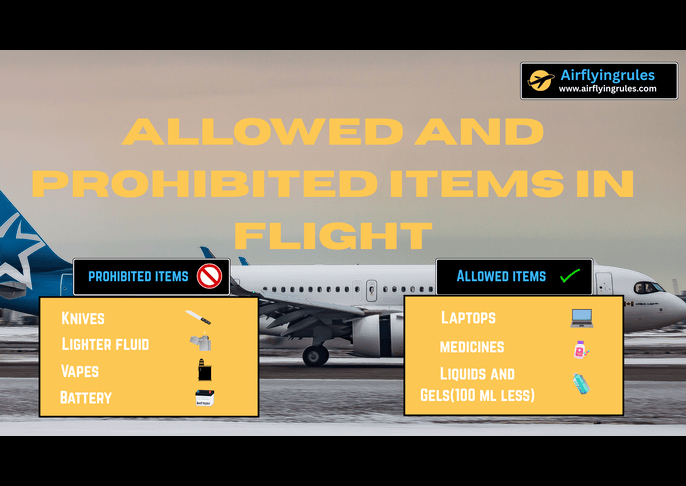
Items that travelers can and cannot bring in carry-on and checked baggage.
- Travel documents, passport, and boarding pass
- Mobile phones, laptops, tablets, and chargers
- Medicines and essential medical equipment
- Baby food and infant supplies (subject to security screening)
- Clothing, books, and personal care products within permitted limits
- Liquids in containers of 100 ml or less when carried in cabin baggage
- Sharp objects such as knives, scissors with long blades, and box cutters
- Explosives, fireworks, flammable liquids, and fuel
- Self-defense weapons or items restricted by aviation authorities
- Toxic chemicals, corrosive substances, and hazardous materials
- Large containers of liquids, gels, or aerosols exceeding cabin limits
Knowing what you can bring Electronics, medications and personal essentials are allowed in your carry-on bag versus checked baggage is equally important. Valuable items, important documents, and prescription medications should always be packed in your carry-on bag to reduce the risk of loss or damage. Firearms, explosives, hazardous materials, and undeclared high-value goods can be prohibited in flights, even Liquid restrictions remain one of the most common reasons travelers experience delays during airport security screening. Most airports require liquids, gels, and aerosols carried in hand luggage to be in containers of no more than 100 ml each and placed inside a transparent, resealable plastic bag. Prohibited in Checked and Cabin baggage: Compressed gases
Larger liquid containers should be packed in checked baggage unless they qualify for specific medical or infant care exemptions. Checking these rules before your trip can save valuable time at security checkpoints.
Strong smelling perishable items are prohibited on some aircraft . Packaged snacks, sandwiches, and dry food are generally allowed in cabin baggage, while certain fresh fruits, meats, dairy products, and agricultural items may face restrictions depending on your destination country’s customs regulations. International travelers should always verify import restrictions before carrying food across borders to avoid confiscation or penalties upon arrival.
Every airline may have slightly different baggage policies objects such as knives, scissors, blades, nail clippers, and razors can be restricted. In addition to government security regulations. Before leaving for the airport, review your airline’s latest baggage rules, weight limits, and prohibited item list. Taking a few minutes to verify the allowed and prohibited items in flight can help you pass security smoothly, avoid unexpected delays, and enjoy a safer, more comfortable travel experience from departure to arrival.
What are the most common prohibited items in flight?
Items such as explosives, fireworks, flammable liquids, sharp weapons, toxic chemicals, and large liquid containers in carry-on baggage are generally prohibited on flights. Always check your airline’s baggage policy before traveling.
airflyingrules.com is proudly powered by WordPress