Infants And Baby Baggage Policy In Airlines 2026
Traveling with a baby can be a wonderful experience, but it also requires proper planning. One of the most important things parents should know is the infant and baby baggage policy of airlines. Every airline has different rules about baggage allowance, strollers, car seats, and baby food. Understanding these policies before your trip can help you avoid extra charges and make your journey smooth and stress-free.
Who Is Considered an Infant in Airlines?
Most airlines define an infant as:
- A baby under 2 years of age.
- The infant usually travels on the lap of a parent or guardian.
- A separate seat is not required unless parents choose to buy one.
- Some airlines offer bassinets for long international flights, depending on availability.
Children who are 2 years or older generally need their own seat and follow different baggage rules.
Infant Baggage Allowance
Many airlines provide a baggage allowance for infants, although the amount may differ depending on the airline and ticket type.
Cabin Baggage
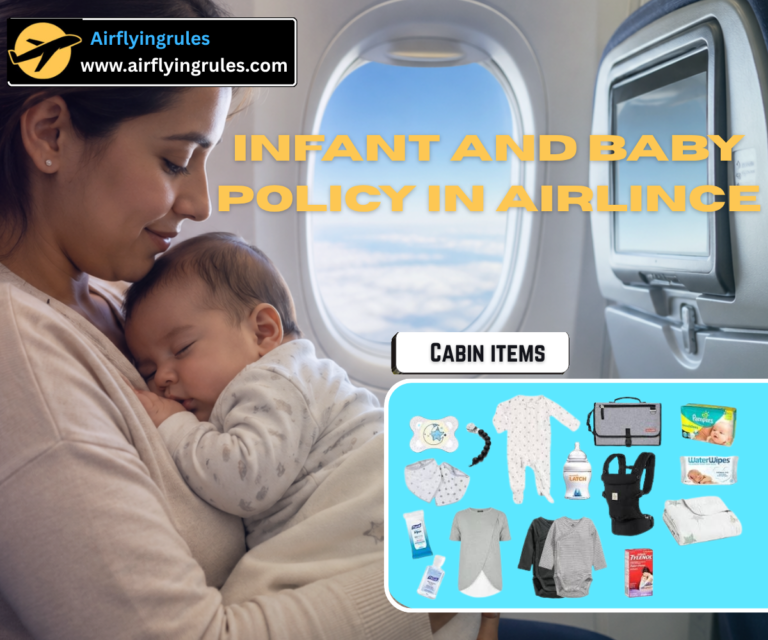
Parents are usually allowed to carry essential baby items in the cabin.
These may include:
- Baby diapers
- Baby wipes
- Feeding bottles
- Baby formula
- Extra baby clothes
- Small blanket
- Medicines required during the flight
Some airlines also allow a small diaper bag in addition to the parent’s cabin baggage
Checked Baggage
Depending on the airline, infants may receive:
- A checked baggage allowance of around 10 kg to 23 kg.
- One checked bag for baby essentials.
- Additional baggage on international flights under certain fare types.
Always check the baggage limit before packing because it varies between airlines.
Stroller and Pram Policy
Most airlines allow parents to travel with a stroller or pram.
Common rules include:
- One stroller per infant is usually allowed free of charge.
- Lightweight strollers can often be used until the boarding gate.
- The stroller is collected at the gate before boarding.
- You can pick it up either right at the aircraft door or at the baggage claim area once you land.
Some airlines will allow you to bring foldable travel strollers into the cabin, as long as they fit within the size guidelines.
Car Seat Policy
Car seats provide extra safety for babies during flights.
Many airlines allow:
- FAA or airline-approved child safety seats.
- Car seats to be used only if the child has a separate booked seat.
- Checking the car seat free of charge if it is not used onboard.
Before your flight, confirm whether your car seat meets the airline’s safety standards.
Baby Food and Milk Rules
Parents can usually carry baby food even if it exceeds the normal liquid limit. Items generally allowed include:
- Baby formula
- Breast milk
- Baby food jars
- Sterilized water for feeding
- Juice for infants when necessary
Airport security may inspect these items separately, so keep them easily accessible.
Bassinet Facility on Flights
Long-haul international flights often provide bassinets for infants. Important points include:
- Available only on selected aircraft.
- Must be reserved in advance.
- Weight and height limits apply.
- Limited numbers are available, so early booking is recommended. A bassinet allows the baby to sleep comfortably during the journey.
Important Documents for Infant Travel
Before traveling, make sure you carry all necessary documents. These may include:
- Infant passport for international travel
- Birth certificate, if required
- Visa for applicable destinations
- Flight ticket
- Carry Medical documents if in case of baby special health needs
Always verify the document requirements for your destination before your trip.
Remember These Common Restrictions
While airlines are generally supportive of families traveling with infants, some restrictions may apply.
Keep these points in mind:
- Baggage allowance differs by ticket type and airline.
- Oversized strollers may need to be checked.
- Cabin baggage must meet airline size and weight limits.
- Bassinets cannot be guaranteed without advance reservation.
- Dangerous items are not allowed in baby baggage.
- Extra baggage may involve additional fees.
Reading your airline’s baggage policy before departure can help you avoid last-minute hassle.
Planning to fly with your little one? Check your airline’s baggage allowance, stroller policy, and baby travel guidelines before you pack for a stress-free journey.
airflyingrules.com is proudly powered by WordPress